How to Cook Malagasy Rice: Vary Maina, Sosoa and Ranovola
How to cook Malagasy rice the Madagascar way: rinsing, kapoaka water ratios, pot method, vary sosoa, ranovola, a vary amin'anana recipe and safe storage.
In Malagasy, the everyday phrase for having a meal is mihinam-bary, literally “to eat rice”, as Wikipedia’s overview of Malagasy cuisine points out. Learning how to cook Malagasy rice means learning the base of almost every meal on the island: dry, separate rice (vary maina) to go under stews and broths, soupy rice (vary sosoa) in the morning, and the final trick that turns the crust at the bottom of the pot into a drink, ranovola. Here is the method step by step, with ratios, timings and the dishes that belong next to it.
Pick the right rice first
Madagascar rice comes in many types and they do not all cook alike. Vary mena, the partly milled red rice, needs more water and more time and is the classic choice for porridge. Long-grain white rice such as Makalioka, grown around Lake Alaotra, swells well, stays separate and has a gentle aroma, which makes it the everyday rice for vary maina. Our guides to Madagascar rice varieties and Makalioka rice explain the differences in more detail.
Age matters too. Freshly harvested rice still holds some moisture and needs less water; rice stored for months is drier and drinks more. Malagasy cooks adjust by eye from one pot to the next.
The kapoaka: Madagascar’s rice cup
In markets and kitchens alike, rice is measured by the kapoaka, a former condensed milk tin. French Wikipedia gives its volume as about 300 ml and notes that one kilo of rice is generally taken to equal about 3.5 kapoaka. The beauty of it in the kitchen is that rice and water are measured with the same tin, so ratios are easy to remember.
Starting ratios for long-grain white rice:
| Dish | Rice | Water | Texture |
|---|---|---|---|
| Vary maina (plain rice) | 1 kapoaka | 1.5 kapoaka (1.75–2 for older rice) | separate grains, crust at the bottom |
| Vary amin’anana | 1 kapoaka | 4–5 kapoaka | loose, risotto-like |
| Vary sosoa | 1 kapoaka | 6+ kapoaka | soft porridge |
If you have no kapoaka, any cup works: what matters is the ratio.
Vary maina in a pot: the absorption method
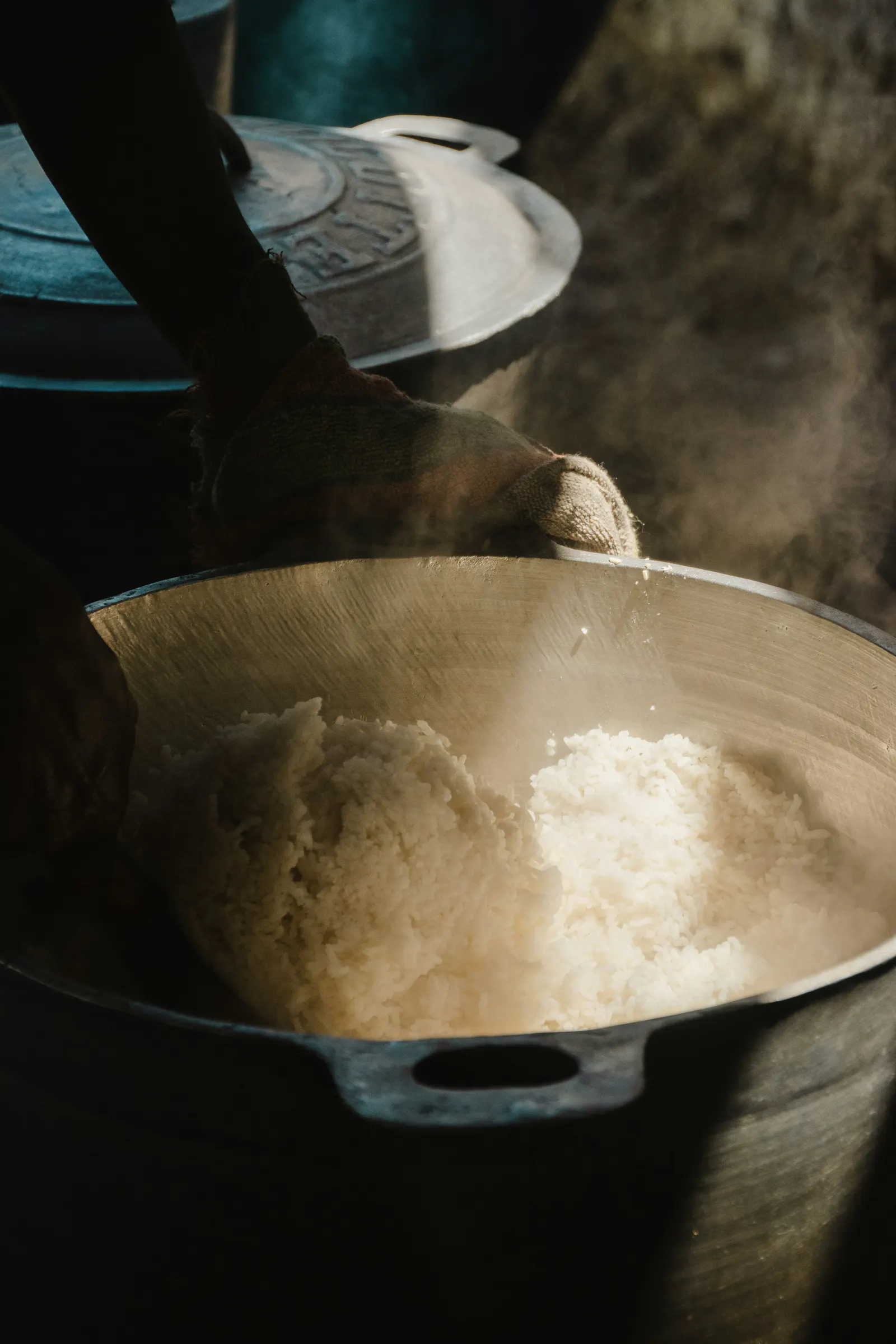
This is the reference method, done in a heavy cast-iron or aluminium pot (vilany), often over charcoal. Nothing is drained; the rice absorbs all the water.
Serves 4: 2 kapoaka white rice (about 570 g), 3 kapoaka water (3.5–4 for older rice), a heavy pot with a lid.
- Sort (2 min). Spread the rice on a tray (traditionally a woven sahafa) and pick out any debris. Well-packed rice has very little, but the habit stays.
- Rinse (3 min). Wash the rice in plenty of cold water, rubbing it between your hands. Pour off the cloudy water and repeat two or three times until it runs almost clear. This removes surface starch and keeps the grains from sticking.
- Add water (1 min). Put the drained rice in the pot and add the measured water. A common rule of thumb: the water should sit about one finger joint above the rice.
- Boil (8–10 min). Over high heat, uncovered, until the water bubbles and drops below the surface. Stir once at the start to free grains from the bottom.
- Absorb (12–15 min). When small craters appear and the surface water is gone, cover and turn the heat right down. Over charcoal, rake away some embers or move the pot to the edge of the fire.
- Make the crust (5 min, optional). A few more minutes on low heat browns the bottom layer into apango, the crust used for ranovola.
- Rest (5 min). Off the heat, lid on. Fluff with a spoon before serving.
Total time is about 35 minutes. Long, white Makalioka Premium rice from Amparafaravola holds up well here: the grains stay whole and separate.
Ranovola: the drink from the bottom of the pot
Once the rice is served, the pot still has one job left. Wikipedia’s entry on scorched rice explains that the crust, apango, is boiled with water to make ranon’apango or ranovola, “golden water”, named for its colour, and that it is often described as the national drink served with traditional food.
How to make ranovola:
- Scoop out the rice and leave the crust in the pot over medium heat for 2–3 minutes, until it browns without blackening.
- Pour in hot water to about half the pot’s height (roughly 1 litre for a family pot).
- Simmer 5–10 minutes until the water turns amber and smells of toast.
- Serve hot with the meal, or chill it.
The habit has a practical side: nothing goes to waste, and boiled water is safer to drink, as this cooking travelogue notes. Some families also eat the softened crust on its own.
Vary sosoa: Malagasy rice porridge
Vary sosoa is the comforting breakfast and the dish cooked for children and the sick. Ile-Rouge.com describes it as rice cooked in a lot of water relative to the grain, served with kitoza (dried or smoked meat), an omelette, or sometimes milk and honey at ceremonies.
- Rinse 1 kapoaka of rice.
- Bring 6 kapoaka of water to the boil with a pinch of salt.
- Add the rice and simmer, uncovered, for 30–40 minutes.
- Stir now and then so it does not catch, adding hot water if it gets too thick.
- It is ready when the grains have burst and the liquid turns creamy.
Vary amin’anana recipe: rice with greens
Vary amin’anana means “rice with greens”. Wikipedia calls it a traditional porridge of rice, meat and chopped leafy greens. Watercress, brèdes mafana (paracress), sweet potato leaves or Chinese cabbage all work, with pork, beef, dried shrimp or kitoza. Ile-Rouge.com suggests about 300 g of rice to 1 litre of water and 30 minutes of cooking, topping up the water as it goes.
Serves 4:
- Prep (10 min). Chop 1 onion, 2 garlic cloves, a thumb of ginger and 1 tomato. Wash and roughly chop 2 bunches of greens.
- Fry (5 min). Soften onion, garlic and ginger in a little oil, then brown 200 g diced meat if using.
- Cook the rice (20 min). Add 1 kapoaka rinsed rice and the tomato, pour in 4–5 kapoaka hot water, salt, and simmer over medium heat, stirring.
- Add greens (5–10 min). When the rice is nearly done, stir in the greens and let them wilt. Add water if needed: the dish should stay loose.
- Serve hot, with a little sakay for anyone who likes heat.
Vary amin’ny laoka: rice and its side dishes
In a Malagasy meal, rice is the main dish and everything else, the laoka, goes with it. A mound of vary maina is served alongside a stew or broth that each person spoons over their rice. Classic pairings:
- Romazava: beef and greens broth, often called the national dish. Wikipedia notes the anamalao (paracress) flowers that leave a mild tingle on the tongue.
- Ravitoto: pounded cassava leaves slow-cooked with pork, garlic and ginger.
- Henakisoa: pork, simmered or fried in its own fat, sometimes with voanjobory (Bambara groundnuts).
- Sakay: a fiery paste of chilli, ginger and garlic. Use sparingly.
- Lasary: tangy pickled vegetables or relish for freshness.
Dry, separate long-grain rice soaks up broth without going mushy, which is why it suits these dishes. For the meaning behind these meals, read our guide to rice in Malagasy culture.
Rice cooker method
Many households in towns and abroad now use a rice cooker. Results are consistent, but there is no crust and so no ranovola.
- Rinse the rice two or three times.
- Add 1.5 volumes of water per volume of long-grain white rice, or follow the bowl markings.
- Run the “white rice” setting: 20–30 minutes depending on the model.
- Leave 10 minutes on “keep warm”, then fluff.
To get some apango back, press a layer of cooked rice into a heavy pan and toast it for a few minutes.
Storing cooked rice safely
Cooked rice deserves care. Bacillus cereus forms spores that survive cooking and can produce toxins if rice sits at room temperature. NC State Extension advises cooling rice as soon as possible and never leaving it overnight in a switched-off rice cooker, oven or pot.
- Refrigerate leftovers within two hours, spread in a shallow container so they cool fast.
- Eat within 3–4 days.
- Reheat only the portion you will eat, once, until piping hot.
- Cooked rice can be frozen, though the texture softens.
Keep uncooked rice sealed, dry and away from heat; well-stored rice keeps its aroma for months.
Get Makalioka rice for your kitchen
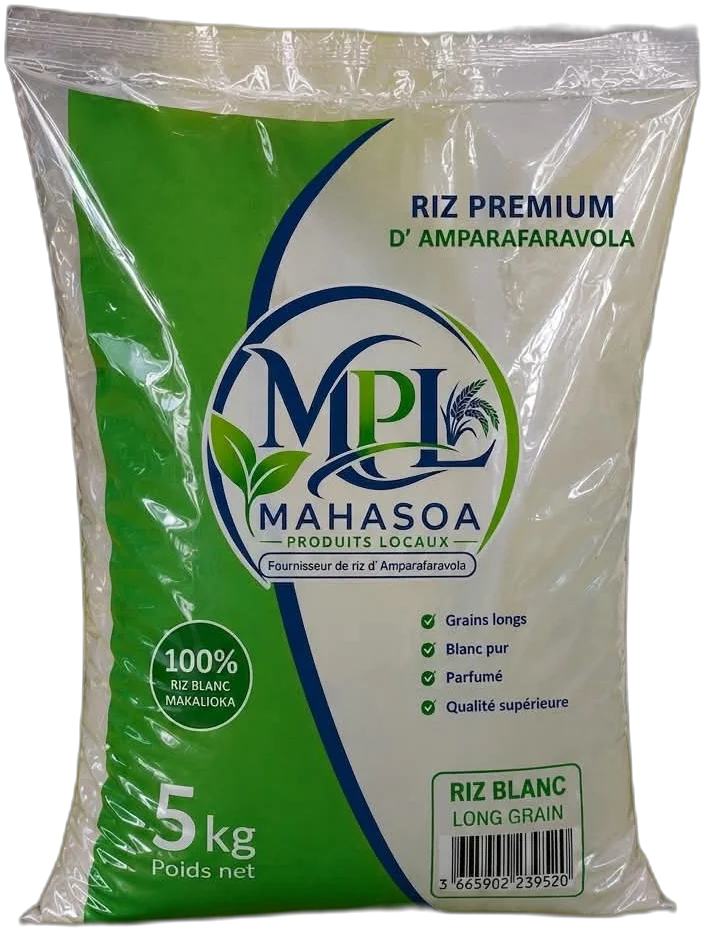
Makalioka Premium white rice from MAHASOA PRODUITS LOCAUX comes from Amparafaravola in the Alaotra-Mangoro region, the rice basin described in our guide to Lake Alaotra. Long grains, pure white, fragrant, packed in 5 kg bags, it works for vary maina and vary amin’anana alike. See the product on the home page or read our guide on how to buy Malagasy rice.
Retailer, restaurant or household? Contact us by phone or WhatsApp on +261 38 51 783 94.
Frequently asked questions
What is the water ratio for Malagasy rice?
For long-grain white rice such as Makalioka, start with 1.5 volumes of water for every volume of rinsed rice; older, drier rice needs 1.75 to 2. In Madagascar both are measured with a kapoaka, an old condensed milk tin of about 300 ml used as a cup. Freshly harvested rice needs a little less.
What is ranovola?
Ranovola, meaning "golden water", is a drink made by boiling water in the pot over the toasted rice crust (apango) left after cooking. It tastes lightly roasted, a bit like toasted corn, and is served with most traditional Malagasy meals, hot or cold.
What is vary sosoa?
Vary sosoa is a soft, soupy Malagasy rice porridge made by simmering rice in a large amount of water until the grains burst. It is eaten for breakfast and given to children and people who are unwell, often with smoked meat (kitoza) or an omelette.
How long can cooked rice be kept?
Cool cooked rice quickly and refrigerate it within two hours; eat it within 3 to 4 days. Never leave rice overnight in a switched-off pot or rice cooker. Bacillus cereus spores survive cooking and can produce toxins that reheating does not destroy.