Makalioka Rice: Origin, Quality and Cooking of Madagascar's Best
Makalioka rice from Madagascar: the Makalioka 34 variety of Lake Alaotra, its long translucent grain, market reputation, how to choose, store and cook it.
Ask anyone in Antananarivo for good rice and you will probably hear one word: Makalioka. Makalioka rice is the long, white, translucent grain that Malagasy shoppers treat as the benchmark of quality, and it sells for more than everyday rice. The name has a precise history behind it. It belongs to a variety selected almost a century ago on the shores of Lake Alaotra, which became the signature of Madagascar’s main rice basin. This guide covers where Makalioka comes from, what makes the grain distinctive, how the market values it, how to pick a good bag, and how to store and cook it.
Makalioka: a variety born at Lake Alaotra
The lake station and Makalioka 34
Makalioka started as a research variety, not a marketing label. In the early 1930s the colonial administration began large irrigation works around Lake Alaotra, a first phase CIRAD researchers date from 1930 to 1958 (Penot and Rakotoarimanana, Géoconfluences, 2011). The agricultural establishment on the lake became the Lake Alaotra agronomic station. According to Patrice Garin and Éric Penot, agronomists there isolated two varieties that would shape the region: Makalioka 34, productive and photoperiod-sensitive, and Rojofotsy, photoperiod-insensitive and more drought tolerant (Garin and Penot, Revue d’anthropologie des connaissances, 2011). Makalioka 34 was selected in the first half of the 20th century, but sources disagree on the exact year.
Makalioka 34 is the product of local selection. It is a Malagasy variety, not an import.
From IRAM to FOFIFA
From the 1950s, the Agronomic Research Institute of Madagascar (IRAM) disseminated many varieties that farmers still grow, including the Makalioka 34 line from the lake station, Ali Combo, Rojofotsy 1285 and Vary lava 16, as economist Jean-Claude Randrianarisoa notes in the Cornell University commune atlas of Madagascar, citing FOFIFA. FOFIFA, the national agricultural research centre, took over this work and maintains a national collection of more than 2,600 rice varieties at Lake Alaotra.
The variety nobody could replace
After independence, the state company SOMALAC managed the lake’s large irrigation schemes from 1961 to 1991; irrigated rice still covered about 30,800 hectares around the lake in 2010 (Géoconfluences). Transplanted Makalioka became the standard crop of those paddies. Researchers later offered rival lines (2798, 2787, 1347) and even a home-grown cross, Tsemaka, bred from Makalioka and 2798. Farmers stayed loyal: in the commune survey cited by Randrianarisoa, almost 88% of communes in the Lake Alaotra region still named Makalioka as their main variety, and the author describes Makalioka 34 as impossible to dislodge.
To see how Makalioka compares with other local rice, read our guide to Madagascar rice varieties; for its growing region, see Lake Alaotra, Madagascar’s rice granary.
What sets the Makalioka grain apart
Long, white and translucent
Technical papers and rice bags describe the grain the same way: long, white, translucent. A UNCTAD presentation on Lake Alaotra rice sums up the basin’s most widely grown variety as “Makalioka, long, white and translucent grains” (UNCTAD, 2014). Translucency matters. A glassy grain holds up better in the mill, breaks less and cooks more cleanly than a chalky one.
A long-season, photoperiod-sensitive plant
In the field, Makalioka is strongly photoperiod-sensitive: it flowers in April whatever the transplanting date. Its growing cycle runs 175 to 185 days, about ten days longer than Dista, Malady or Rojofotsy (UNCTAD).
Because flowering is fixed, late transplanting cuts into the growing period. A resilience study from Lake Alaotra puts the loss at roughly one tonne per hectare for each month of delay, and flags Makalioka 34’s sensitivity to rice blast and stem borers (Madikatra resilience analysis). The variety also needs standing water at flowering, which ties it to well-managed irrigated paddies. One harvest a year, a long season and steady water needs all feed into its price.
Makalioka’s reputation in Malagasy markets
Madagascar’s most expensive rice
Economists Takeshi Sakurai and Yutaka Arimoto tracked milled-rice prices for 39 weeks in 31 markets across the island. Malagasy markets, they found, sort rice into four groups: vary gasy, tsipala, makalioka and imported rice. Makalioka is considered high-grade rice, and cleanly milled Makalioka is the most expensive rice in Madagascar (Sakurai and Arimoto, IDE-JETRO, 2014). Their regression confirms a significant premium over ordinary local rice, and shows that white and long-grain rice generally fetch more.
The same study notes that Makalioka, unlike tsipala, a market name covering several rices that are often shorter and rounder, is easy to tell apart by eye, and is often sold in branded packs in city supermarkets. Malagasy newspapers track its price as a barometer of the rice market (Midi Madagasikara).
“Luxury rice” that holds its shape
Around the lake, farmers call Makalioka 34 “luxury rice, much appreciated by consumers”, easy to sell at a good price. In the kitchen it stays separate, swells well and suits a romazava broth or a ravitoto stew equally. It is the rice for celebrations, and also for households that want an everyday rice that needs no tedious sorting.
How to recognise good Makalioka rice
The name alone guarantees little. Sakurai and Arimoto found that the market’s “makalioka” category actually covers several names, including Dista and Tsemaka, so in practice the word can mean a type of rice rather than one exact line. Check:
- Shape: long, slender, even grains. Short round grains mixed in mean a blend.
- Colour: clean, translucent white. Very opaque, chalky or yellowed grains suggest poor drying or old stock.
- Broken grains: good Makalioka has few. Lots of brokens cook unevenly and turn sticky.
- Cleanliness: no stones, husks, straw or dust.
- Smell: clean and grainy, never musty.
- Traceability: a sealed bag naming the variety, origin and packer beats anonymous loose rice.
Our guide on how to buy Malagasy rice covers formats and where to buy.
Storing Makalioka rice
White rice keeps a long time if you protect it from moisture, heat and insects such as weevils. Keep it in an airtight container (lidded bucket, jar or food-grade drum), in a cool, dry, dark place and off the floor. Clean containers before refilling them, since insects survive in old residue. If you spot weevils, isolate the batch; freezing small quantities for a few days is a common home remedy. Cool cooked rice quickly and refrigerate it for a few days at most.
How to cook Makalioka rice
Makalioka suits the classic Malagasy absorption method, vary maina, which gives dry, separate grains.
| Dish | Rice | Water | Result |
|---|---|---|---|
| Vary maina (plain rice) | 1 cup | 1.5 cups | separate grains |
| Older, drier rice | 1 cup | 1.75 to 2 cups | tender grains |
| Vary sosoa (rice porridge) | 1 cup | 6 cups or more | soft porridge |
- Rinse the rice two or three times in cold water until it runs almost clear.
- Measure water with the same container as the rice. In Madagascar that is the kapoaka, an old condensed-milk tin of about 300 ml.
- Boil uncovered over high heat, stirring once.
- Absorb: once the surface water is gone, cover and cook on very low heat for 12 to 15 minutes.
- Rest five minutes off the heat, then fluff.
Keep the crust at the bottom of the pot, the apango: boiled with water it becomes ranovola, Madagascar’s toasted-rice drink. Every variation is explained in our guide on how to cook Malagasy rice.
Makalioka Premium from Amparafaravola
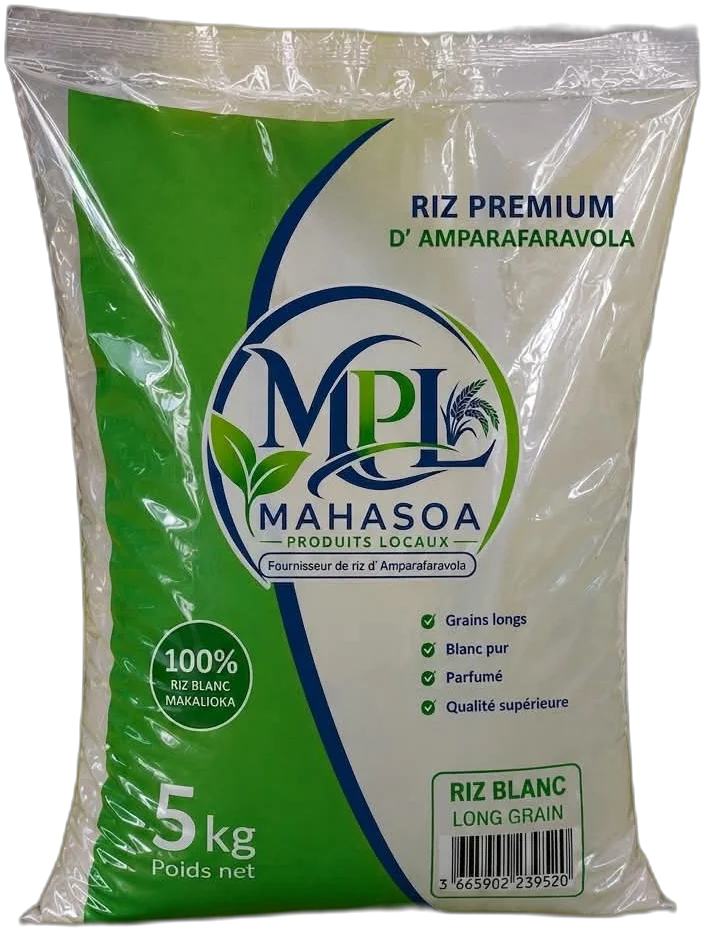
Amparafaravola lies on the western side of Lake Alaotra, about 65 km from Ambatondrazaka. It is a rural commune where rice is the main crop and more than 80% of residents farm (Wikipedia). This is where MAHASOA PRODUITS LOCAUX selects and packs its Makalioka Premium white rice in 5 kg bags: 100% white Makalioka rice, long grains, pure white, fragrant, carefully selected and packed for a clean product suited to daily meals and to cooking.
Order Makalioka rice
Household, grocer, restaurant or reseller looking for clean, consistent Makalioka rice from Amparafaravola? Contact us by phone or WhatsApp on +261 38 51 783 94, or visit our home page.
Frequently asked questions
What is Makalioka rice?
Makalioka is a long-grain white rice variety from Madagascar, with slender, translucent grains. Its reference line, Makalioka 34, was selected at the Lake Alaotra agronomic station in the first half of the 20th century (sources disagree on the exact year), later disseminated by IRAM, and is still the dominant variety around the lake. In Malagasy markets the name stands for premium rice, often sold as "luxury rice".
Where does Makalioka rice come from?
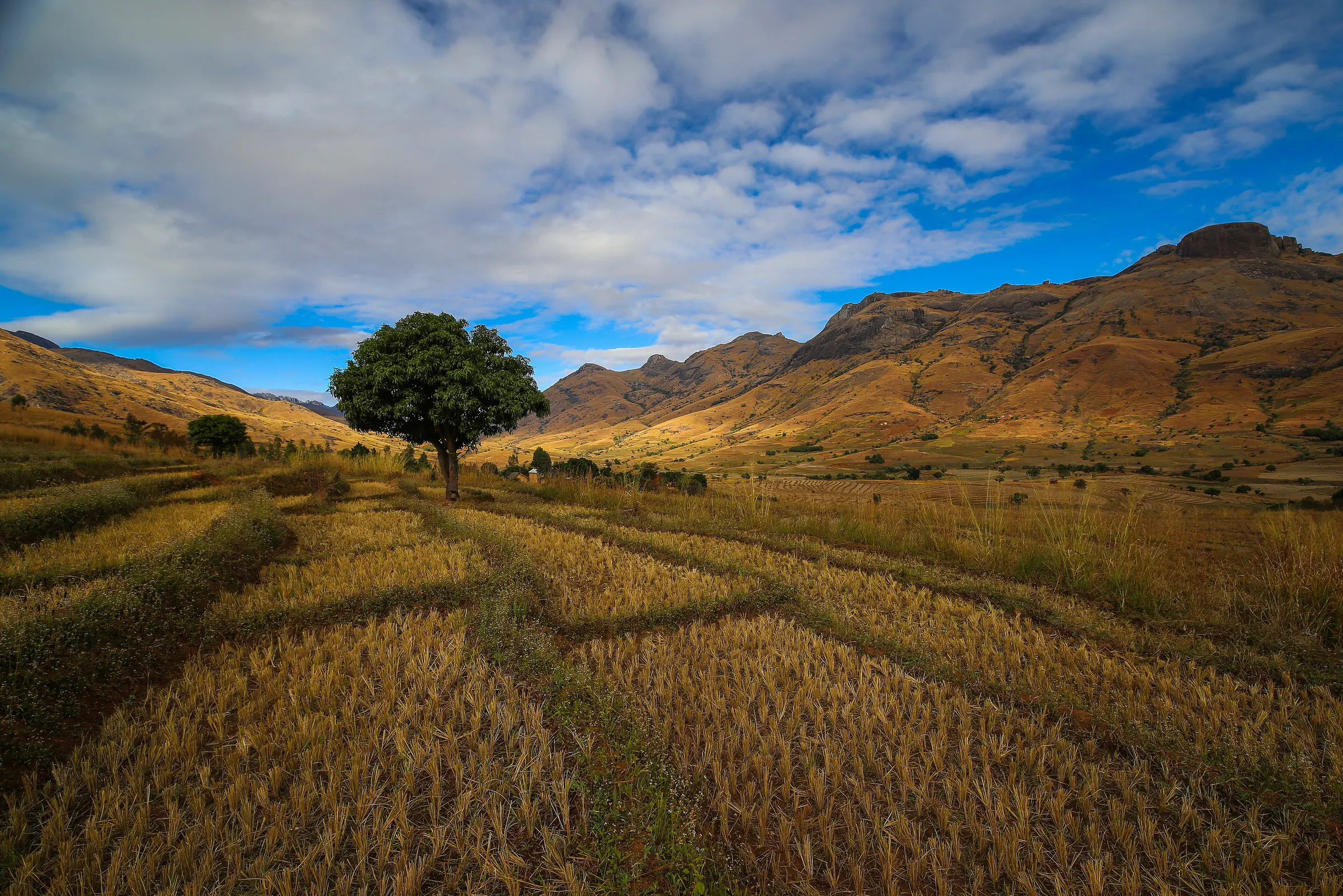
It comes from the Lake Alaotra basin in the Alaotra-Mangoro region, northeast of Antananarivo, the most important rice-growing area of Madagascar. Most of it is grown in the irrigated paddies around Ambatondrazaka and Amparafaravola, where the variety was first selected and later spread through large state irrigation schemes.
Why is Makalioka more expensive than other Malagasy rice?
Price surveys across 31 Malagasy markets found that Makalioka sells at a significant premium over ordinary local rice, and that cleanly milled Makalioka is the most expensive rice in the country. Consumers value its long white grain and the way it cooks. Its long growing cycle of about six months also means only one harvest a year.
What is the water ratio for cooking Makalioka rice?
Use about 1.5 cups of water for 1 cup of rinsed Makalioka for fluffy, separate grains, and 1.75 to 2 cups if the rice is older and drier. Bring to the boil uncovered, then cover and cook on very low heat for 12 to 15 minutes. Let it rest five minutes before fluffing.